

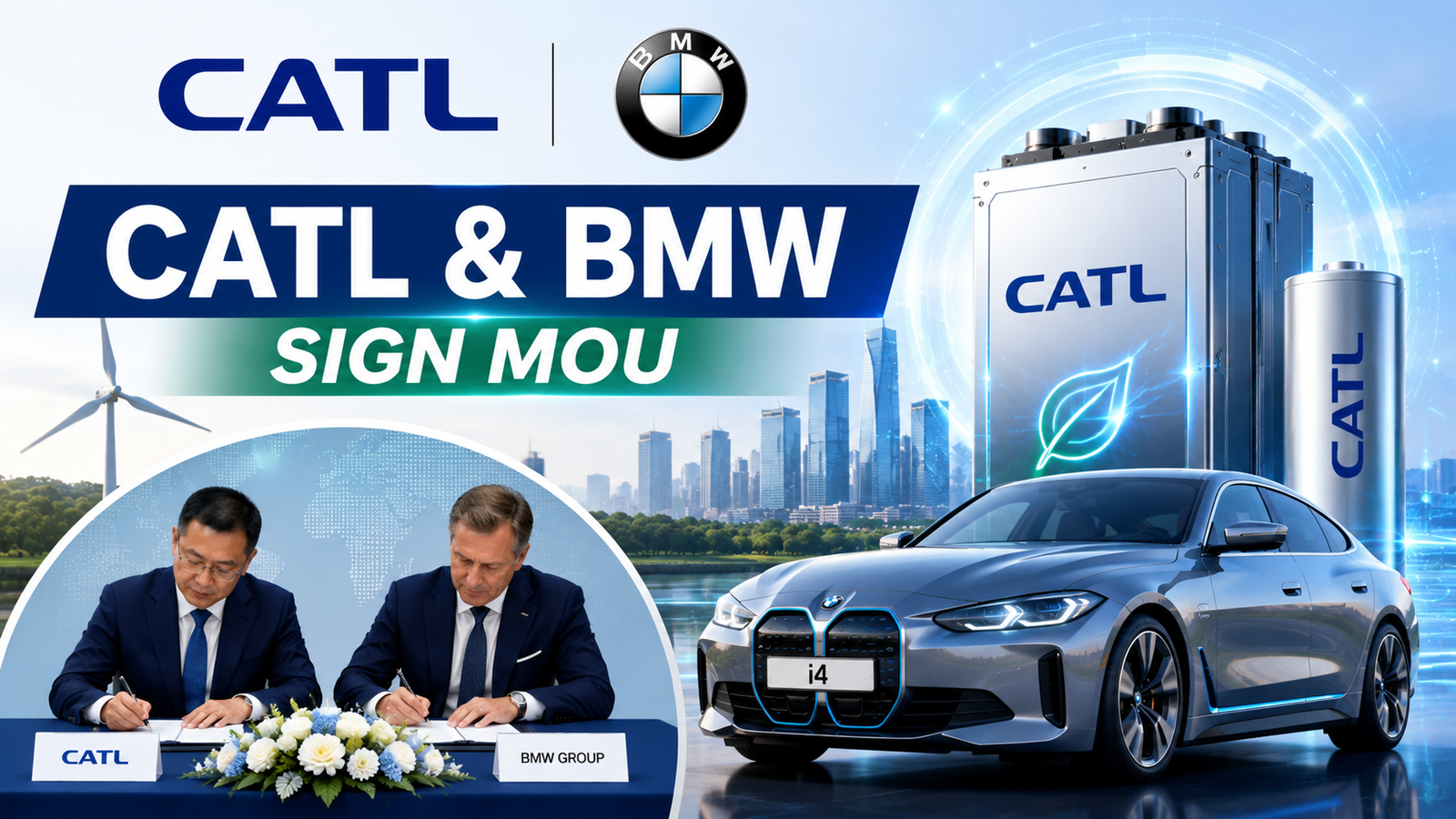
Chinese battery manufacturing giant CATL and German luxury carmaker BMW Group have signed a new Memorandum of Understanding (MOU) to strengthen cooperation on battery transparency, carbon footprint tracking, and decarbonization across the electric vehicle (EV) supply chain.
The agreement was signed in Beijing on February 25 during the visit of German Chancellor Friedrich Merz to China, accompanied by a high-level German business delegation. The partnership marks another major step in the growing collaboration between two of the world’s leading companies in the electric mobility sector.
Under the new MOU, CATL and BMW will launch pilot projects focused on the Battery Passport, a digital system designed to provide detailed information about a battery’s lifecycle, including raw material sourcing, carbon emissions, production history, and recycling data.
The companies will also work together on trusted cross-border data exchange, carbon accounting methodologies, and innovative tools to accurately measure and calculate battery carbon footprints. These initiatives are aimed at improving transparency and ensuring compliance with emerging global sustainability standards.
A key aspect of the agreement is the use of Catena-X, a standardized automotive data ecosystem that enables secure and reliable data sharing among industry participants. Through this platform, CATL and BMW seek to align technical standards, support science-based policy frameworks, and promote long-term stability in the global battery supply chain.
The Battery Passport concept has gained increasing importance as governments, particularly in Europe, push for stricter environmental regulations and greater supply chain transparency in the electric vehicle industry. By jointly developing and testing these systems, CATL and BMW aim to support China-EU regulatory compliance and accelerate the adoption of global battery information standards.
CATL and BMW have maintained a strategic partnership since 2012, collaborating in battery production, research and development, and sustainable supply chain initiatives. The latest agreement significantly expands their relationship beyond product development and manufacturing, moving into broader institutional cooperation and regulatory coordination.
Both companies believe that enhanced digital management and data exchange capabilities will strengthen their ability to meet European Union market access requirements while improving the low-carbon competitiveness of their electric vehicle products.
As the global automotive industry rapidly transitions toward electrification, battery sustainability and transparent supply chains are becoming increasingly critical. The new CATL-BMW agreement demonstrates how international partnerships are evolving to address not only technological innovation but also environmental responsibility and regulatory compliance.
By deepening cooperation on battery passports and decarbonization, CATL and BMW are positioning themselves at the forefront of the next phase of the global EV revolution, where data transparency, sustainability, and carbon reduction will play a central role in shaping the future of electric mobility.
CATL and BMW Partnership
READ MORE : Meta Ray-Ban Glasses vs Google Android XR
