



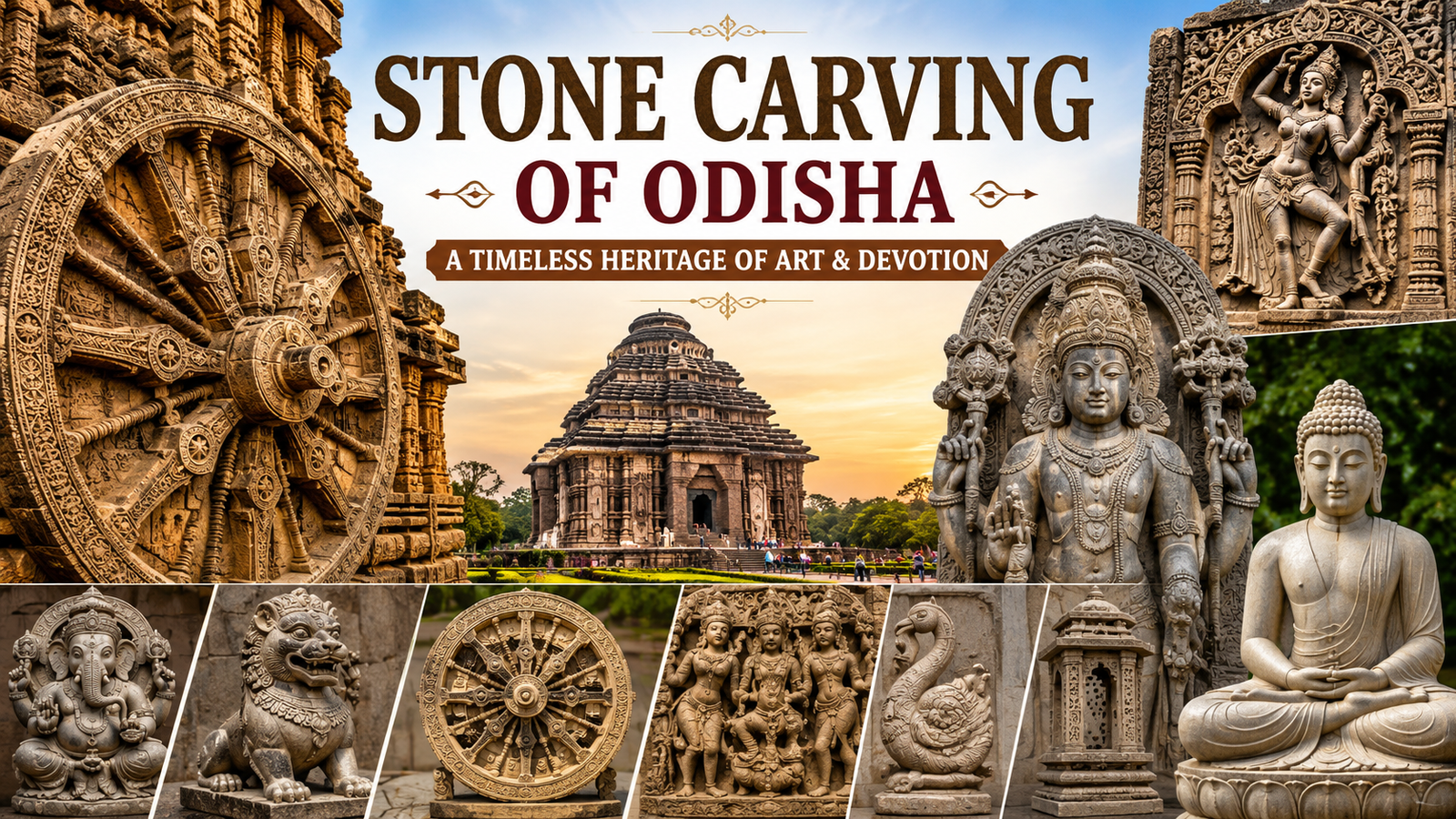
Odisha is widely known for its rich cultural heritage, magnificent temples, and traditional handicrafts. Among its many artistic traditions, stone carving holds a special place. The state’s stone sculptures are admired for their intricate detailing, spiritual significance, and architectural beauty. From ancient temple walls to modern decorative statues exported worldwide, Odisha’s stone carving tradition continues to represent the artistic brilliance of Indian craftsmanship.
This centuries-old art form is not only a source of cultural pride but also an important livelihood for thousands of artisans across the state.
History and Age of Odisha’s Stone Carving Tradition
The tradition of stone carving in Odisha is believed to be more than 2,000 years old. Archaeological evidence from ancient Buddhist sites such as Lalitgiri, Ratnagiri, and Udayagiri shows that sculptural art flourished in the region long before the medieval period.
The craft reached its peak between the 7th and 13th centuries during the rule of the Eastern Ganga dynasty and other regional kingdoms. During this time, Odisha became famous for Kalinga-style temple architecture, where stone carving played a central role.
Some of the finest examples include the Konark Sun Temple, Lingaraj Temple in Bhubaneswar, Mukteswar Temple, and Jagannath Temple in Puri.
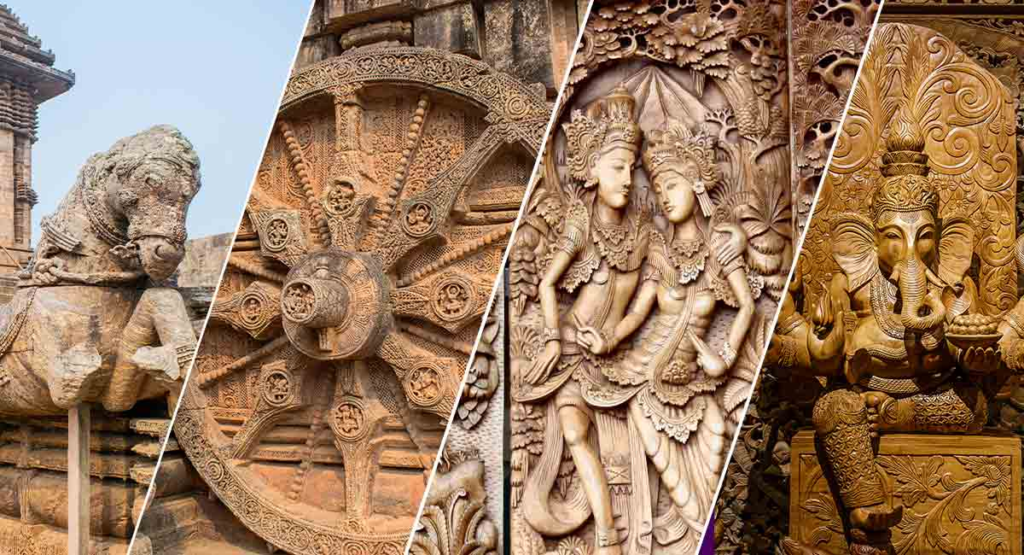
The Konark Sun Temple, built in the 13th century, remains one of the greatest achievements of Indian stone architecture. Its giant stone wheels, horses, dancers, musicians, and mythological carvings continue to amaze visitors from around the world.

Materials and Techniques Used
Odisha’s artisans mainly use stones such as sandstone, soapstone, granite, chlorite stone, and marble. Among these, soapstone is highly preferred for detailed carving because of its smooth texture.
The process of stone carving is completely handmade and requires immense patience and skill. First, the artisan sketches the design on the stone block. Then, using traditional tools like chisels and hammers, the rough shape is created. Fine detailing and polishing are done gradually over several days or months depending on the size and complexity of the sculpture.
This art form is often passed from one generation to another within artisan families.
Global Demand for Odisha Stone Carvings
Today, Odisha’s stone sculptures are in demand not only in India but also in many foreign countries. Handcrafted statues of Hindu gods and goddesses such as Lord Jagannath, Ganesha, Shiva, Buddha, Saraswati, and Durga are exported worldwide.
Countries where Odisha stone carvings are popular include the United States, United Kingdom, Australia, Singapore, Nepal, Canada, and Gulf countries.
Temples built by the Indian diaspora abroad often order idols from Odisha because of their traditional authenticity and religious value.
Apart from religious statues, decorative stone art has also gained popularity in international markets. Hotels, resorts, architects, interior designers, and art collectors use Odisha stone sculptures for garden decoration, interior design, heritage-themed architecture, cultural exhibitions, and luxury landscape projects.
The famous Konark wheel has become an international symbol of Odisha’s artistic identity.

Prominent Award-Winning Sculptors from Odisha
Raghunath Mohapatra
Raghunath Mohapatra was one of India’s most respected stone sculptors. He received the Padma Vibhushan, India’s second-highest civilian award, for his contribution to temple architecture and sculpture. His work reflected the grandeur of ancient Kalinga art and inspired many young sculptors.
Sudarsan Sahoo
Sudarsan Sahoo is another prominent sculptor from Odisha known for combining traditional sculpture with modern artistic ideas. He has also been honoured with prestigious national awards for promoting Indian sculpture globally.
Other Recognized Artisans
Many artisans from Odisha have received National Awards, State Awards, Shilp Guru Awards, and Lalit Kala Akademi recognition. These honours have helped bring international attention to Odisha’s stone carving heritage.
Government Schemes Supporting Stone Carving Crafts
Handicrafts Development Programme
This scheme provides skill development training, financial assistance, modern tool support, and design improvement programs.
Development Commissioner (Handicrafts)
Under the Ministry of Textiles, artisans receive support for marketing, participation in trade fairs, export promotion, artisan identity cards, insurance, and welfare schemes.
Utkalika Odisha State Emporium
Utkalika helps market Odisha handicrafts in India and abroad by giving artisans a direct platform to sell their products.
GI Tag Protection
Konark stone carving has received Geographical Indication (GI) recognition, which protects the authenticity and regional identity of the craft.
Important Stone Carving Centers in Odisha
Some major stone carving hubs in Odisha include Konark, Puri, Bhubaneswar, Khiching, and Cuttack. These places have artisan communities that have practiced stone carving for generations.
Challenges Faced by the Industry
Rising Cost of Raw Materials
Stone prices and transportation costs have increased significantly.
Lack of Young Artisans
Many younger generations are choosing different careers because stone carving requires years of training and hard physical labour.
Competition from Machine-Made Products
Cheap machine-made replicas reduce the demand for handmade sculptures.
Limited International Marketing
Many artisans still lack access to global online markets and export opportunities.
Importance of Stone Carving in Odisha’s Culture
Stone carving is more than just a profession in Odisha. It is deeply connected to religion, architecture, and cultural identity. The sculptures reflect stories from Hindu mythology, Buddhism, dance traditions, and everyday life.
The art also plays an important role in preserving Odisha’s temple heritage and tourism industry. Millions of tourists visit Odisha every year to witness its ancient stone architecture and craftsmanship.
Conclusion
The stone carving tradition of Odisha stands as a timeless symbol of India’s artistic excellence. With a history of over two millennia, this craft continues to inspire the world through its beauty, precision, and spiritual depth.
Even in the modern age, Odisha’s artisans preserve ancient techniques while adapting to global markets. Their dedication keeps alive a cultural legacy that connects the past with the present.
With better government support, international promotion, and encouragement for younger artisans, Odisha’s stone carving industry has the potential to grow even stronger and gain greater recognition across the world.

